Planning a family safari in Kenya is exciting, but the long first drive can create a specific worry. If you have ever searched for what if my child gets carsick safari, you are asking the right question. Roads are part of the adventure, but they are also the part that can turn a happy child pale. This guide gives you a working plan: what to do in the first five minutes, how to brief the guide, which seat to choose, what to pack, and when to change the route.
You do not need a medical degree to handle motion sickness. You need a simple plan, a calm parent, and a guide who understands children.
What if my child gets carsick safari?
Tell the driver-guide at the first sign of nausea, then ask for a safe stop rather than waiting for vomiting. Let your child sit quietly with eyes closed, cool the forehead, loosen tight clothing, and offer small sips of water. Keep a bag, towel, wipes, and spare clothes ready. Symptoms usually ease after motion stops.
The goal is to act before nausea turns into vomiting. Many parents wait to see if it passes. Waiting often makes it worse. These seven fixes work in order.
- Tell the driver-guide at once. Use the word “carsick” so there is no confusion.
- Ask for the next safe stop. In a park, drivers may only stop at designated areas.
- Cool the child. Use a cool wet wipe on the forehead and neck, or let fresh air flow in.
- Loosen tight clothing and support the head against the headrest.
- Have the child sit still with eyes closed. Slow breaths help some children.
- Keep cleanup supplies close. A sick bag, towel, wipes, and a change of clothes should be within reach.
- Offer small sips of water once the vehicle stops. Do not push food until the child feels ready.
This first five minute plan matters because a child who recovers quickly can still enjoy the game drive. A child who vomits repeatedly may need the rest of the day off. The guide can help you decide whether to continue slowly or return to the lodge and try again later.
How can I prevent child motion sickness before a Kenya game drive?
Prevent safari carsickness by choosing a steadier seat, looking toward the horizon, avoiding phones and books, keeping the vehicle cool, and eating a small, plain snack beforehand. Tell the guide before leaving so the route and speed can be adjusted. Test any pediatric medicine at home and use it only with professional advice.
Prevention starts the night before. Children who sleep well handle rough rides better. A light breakfast is better than no breakfast or a heavy one. Tell your operator about the child’s history before the drive begins. A guide who knows may choose smoother tracks, adjust speed, and plan extra stops.
If you are deciding how to travel, a private guide versus group safari can make a big difference. A private guide gives you more freedom to stop, slow down, or change the plan without affecting other guests. In a group vehicle, the driver may hesitate to pause for one child.
Child motion sickness is common, so there is no need to feel embarrassed. Good guides have seen it many times. They want the child to remember the elephants, not the nausea.
Where should a carsick child sit in a safari vehicle?
Place a carsick child where they can see forward and receive fresh air, usually the front or middle row when the vehicle’s safety rules allow it. Avoid a rear-facing or bouncing back seat, and keep the child’s head supported against the headrest. Confirm the safest position with the operator, especially for young children.
The front and middle rows are steadier than the tail. Ask the operator whether a front or middle seat is allowed for your child’s age and booster seat. If the child can see the horizon and get moving air, that often helps. Keep the head supported and avoid bouncing rear seats.
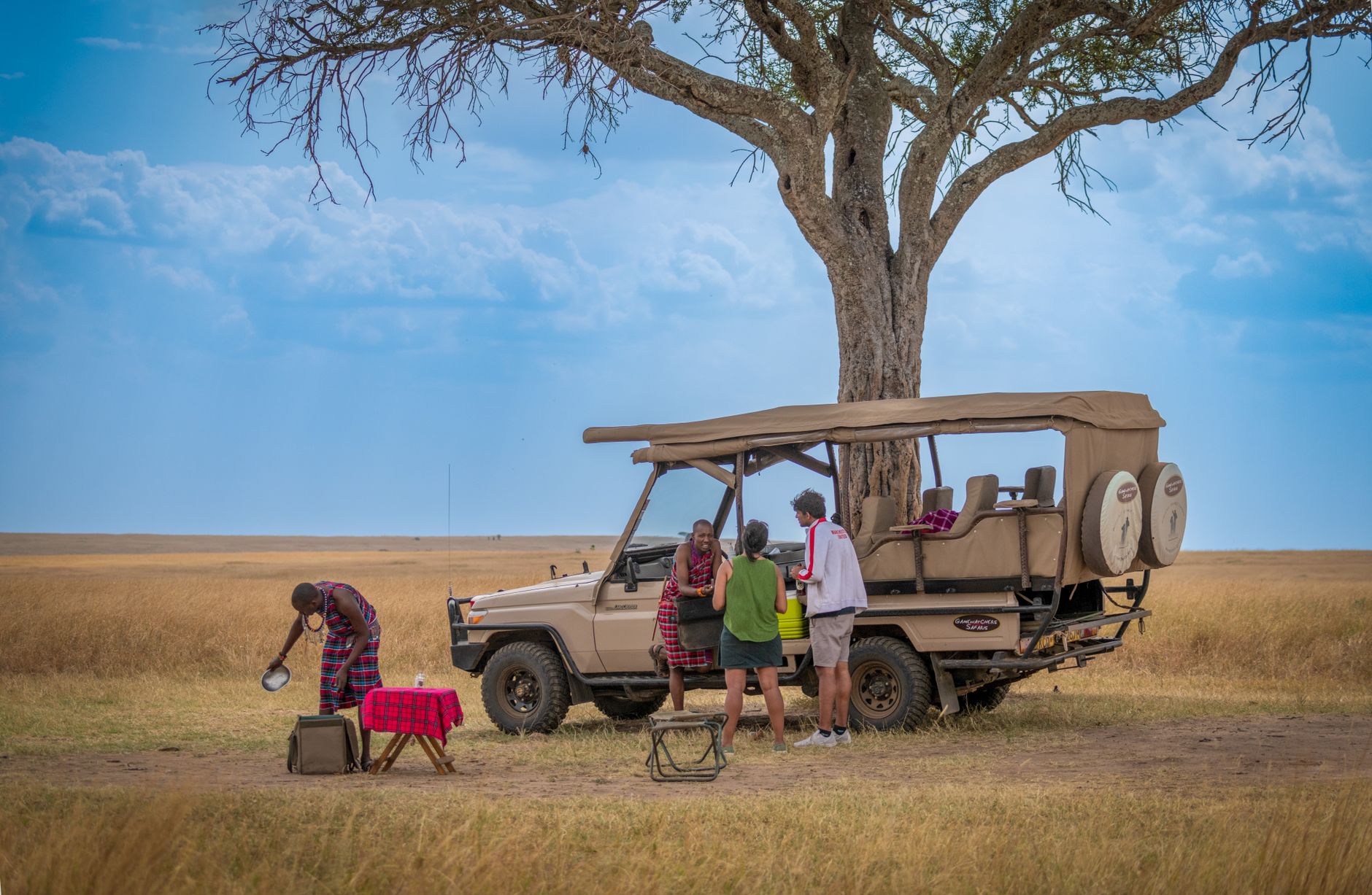
Safari vehicles are high, open-sided, and often have rows of raised seats. The back row is the bounciest. A child who is prone to carsickness should not sit there. If the vehicle has lap belts, use them even on short drives. Standing up while moving is not safe.
For age and seat rules, check our Kenya safari child age restrictions before you book. Rules differ by camp and vehicle type, and a child who is too small for a standard seat may need a booster or a different vehicle.
What food, drinks, and activities help or worsen nausea?
Offer a light snack such as crackers, toast, or a banana before departure, then encourage small sips of water instead of large drinks. Avoid greasy meals, heavy portions, and screens, books, or cameras that require close focus. Looking outside, listening to an audio story, resting, and cool moving air can reduce symptoms.
Pack a small day bag with plain snacks such as crackers, rice cakes, pretzels, sliced apple, or a banana. Avoid greasy food, heavy breakfasts, and sugary fizzy drinks. Water in small sips is better than a large bottle at once. For activities, looking outside beats reading, using a phone, or taking close-up photos.
Audio stories can replace screens. Many children listen for an hour without feeling sick. Point to distant animals and landmarks so the child looks outward. If the vehicle has a roof hatch, some children feel better when they stand inside the vehicle as the rule allows, but only with the vehicle stopped and an adult holding on.
Ginger biscuits or ginger sweets are worth trying if the child already likes the taste. The evidence on ginger for motion sickness is mixed, but it is harmless for most children. If you are not sure, ask your pediatrician first.
For a complete list of family gear, see our Kenya safari packing list. A good day bag can make the difference between a ruined drive and a short rest stop.
Are Kenya safari roads bad for carsickness?
Some Kenya safari roads are rough, especially gravel tracks in the Mara and conservancies, but many park roads are reasonably formed. Carsickness depends more on seat choice, speed, and stops than on the road alone. With steady driving and planned breaks, most children manage fine.
The route matters more than the total distance. Some families think a direct, faster route is always better. In practice, a smooth three-hour drive can be easier than a bumpy two-hour one. When you plan the itinerary, ask the operator to avoid the roughest park entries if possible.
Once you ask what if my child gets carsick safari, the answer is not only about medicine. It is also about how the itinerary is built.
The table below shows typical route patterns for families starting from Nairobi. Times are indicative, not guaranteed, because weather, traffic, and wildlife sightings change every drive.
| Route from Nairobi | Typical drive time | Road mix | Family-friendly tactic |
|---|---|---|---|
| Lake Nakuru | 3 to 4 hours | Mostly tarmac, short rough entry | Stop at the gate; start early |
| Lake Naivasha | 2 to 3 hours | Mostly tarmac, some gravel | Good first-day drive |
| Ol Pejeta | 4 to 5 hours | Tarmac, then gravel | Split the drive; ask for steady speed |
| Masai Mara | 5 to 6 hours | Tarmac to Narok, then gravel | Fly one way or break into two legs |
For Lake Nakuru and Ol Pejeta planning, our Lake Nakuru guide and Ol Pejeta conservancy guide go into more detail. In the Masai Mara, private conservancies often allow more flexible driving and fewer vehicles. That can mean shorter, smoother tracks and less stopping and waiting. See our Masai Mara guide if you are weighing the Mara.
Rainy seasons can make gravel sections slippery. Dry seasons bring dust and corrugation. No season offers perfect roads. The best approach is to choose an itinerary with one easy driving day after arrival and to build in a buffer. Our rainy-season road advice covers how to plan around both wet and dusty conditions.
A slow vehicle is also better for wildlife viewing. You have more time to watch an animal without engine noise or sudden turns. Stopping at a safe viewpoint lets the child breathe, drink water, and reset. That protects the child and makes the safari experience more enjoyable for everyone.
When should you use medicine or seek medical help?
Ask your child’s pediatrician about motion-sickness medicine before the trip, because products such as dimenhydrinate can cause drowsiness or unexpected agitation and require age-appropriate dosing. Seek medical advice if symptoms occur without movement, continue unusually long, or include severe headache, trouble walking, vision or hearing changes, or persistent vomiting.
Medicine is not the first step. If your child has never had motion sickness before, start with seat, snack, air, and stops. If the problem persists, ask your child’s pediatrician about motion sickness medicine for children. Products such as dimenhydrinate can work, but they can also make a child sleepy or, less often, restless. Dose depends on age and body weight.
Dramamine contains dimenhydrinate. Some products are sold as children’s versions, but the correct age and dose vary by country and product. Ask a pharmacist once you know the child’s weight. Test any new medicine at home at least a day before travel. Never test it for the first time on a five-hour drive.
Ginger and wristbands are not a replacement for professional advice. They may offer comfort, but their evidence is mixed.
Seek medical help if symptoms occur when the child is not in a vehicle, if vomiting continues for hours, or if you see severe headache, trouble walking, vision changes, hearing changes, or a stiff neck. These are not typical motion sickness signs and need a prompt medical check.
What Do Families Ask About Safari Carsickness?
Parents ask the same questions over and over: what to do in the moment, how to prevent nausea, where a child should sit, whether medicine is safe, and how long symptoms last. The short answers below follow the pediatric guidance used throughout this page.
What if my child gets carsick on safari?
Tell the guide immediately and request the next safe stop. Let your child rest with eyes closed, provide cool air and small sips of water, and use a sick bag, towel, wipes, and spare clothes. Most motion-sickness symptoms improve after the vehicle stops.
How do I prevent motion sickness on a safari?
Give your child a light snack, choose a forward-facing seat with a view outside, keep the vehicle cool, and avoid screens or reading. Mention the problem to the guide before the drive so rough sections, speed, and stops can be managed. Discuss medication with a pediatrician beforehand.
Where should a child sit in a safari vehicle?
A child prone to carsickness should generally sit in a front or middle position where they can look forward and get airflow, provided that position complies with the vehicle’s safety rules. Avoid the most unstable rear seat and keep the child’s head supported.
Can children take Dramamine before a safari?
Some children’s dimenhydrinate products are available for young children, but the correct age, dose, timing, and suitability must be confirmed with a pediatrician and the product label. It can cause sleepiness or, occasionally, the opposite reaction, so test it at home rather than for the first time on safari.
How long does motion sickness last in children?
Motion-sickness symptoms commonly begin improving once the movement stops, although nausea and fatigue may continue for several hours. Contact a healthcare professional if vomiting persists, symptoms occur when the child is not travelling, or warning signs such as severe headache, balance problems, or vision changes appear.
Where Can You Find More Safari Planning Resources?
- Kenya family safari from SafariPure
- Kenya wildlife tours from Trunktrails Safaris
- Nairobi to Maasai Mara route guide from Valley Safaris
- Family safari collection on FindMySafari
Where Can You Compare Safari Operators And Packages?
A child who feels carsick can recover quickly when the operator, vehicle, and route plan are right. That is why it pays to compare safari operators before you book. To compare safari operators or browse family-friendly packages, visit FindMySafari, Valley Safaris, or Trunktrails Safaris. Look for vehicle seating, child age rules, itinerary pace, and how flexible the driver can be. The right plan will let your child watch the elephants instead of counting the minutes to the next stop.